BIOMIMICRY
Humans are now finding inspiration in nature itself.
It is much easier to copy processes, emulate shapes and functional solutions that abound all around us. There are indeed millions of examples surrounding our lives from where to consider how the hell nature found solutions and relationships without any thinking or technology involved which provide so many advantadges for life to thrive and adapt. What matters is that human technology and science can today offer stronger tools to mimic and biomimic all kind of nature evolvements that took probably millions of years to reach. The term biomimicry appeared in 1982 and was popularized by scientist Janine Benyus through her 1997 book Biomimicry: Innovation Inspired by Nature.

https://biomimicry.org/
http://quaderns.coac.net/en/2014/03/biomimicry/
There’s probably thousands of biomimicry research projects going on at this very moment. A few examples are:
Researchers at the University of California, Berkeley are developing a bionic leaf that converts solar energy into hydrogen, which could help fuel electric cars and, eventually, entire buildings.
Prairie dogs ventilate their underground warrens by creating two tunnel entrances, one tall and narrow, the other wider and more shallow, which helps suck out stale air. Ask Nature suggests using the system for a passive ventilation system in buildings.
At McGill University in Montreal, the Biomimetic Materials Laboratory is trying to create a synthetic version of nacre, which forms the inner layer of mollusk shells and is 3,000 times stronger than the mineral from which it is made. No synthetic material can match this kind of ‘toughness amplification,’ to use the technical term. If scientists can determine what allows nacre to become more than the sum of its parts, the durability of other basic materials could be increased.
Villagers in the Indian state of Meghalaya have woven together the roots of banyan trees to create living bridges that grow stronger with each passing year.
Experimental installations, like Marc Fornes’ nonLin/Lin Pavilion in Orleans, France, which consists of perforated aluminium sheets that can be connected and replicated infinitely.
A biomimetic building is the mixed-use Eastgate Centre in ZImbabwe, designed by architect Mick Pearce in collaboration with engineers at Arup. Its ventilation system is modelled on that of a termite mound, with an open courtyard and a series of ducts that draw air into the building, cooling or heating it depending on the difference in temperature between the building mass and the air outside.
Researchers at MIT Media Lab’s Mediated Matter group created the Silk Pavilion using a robotic arm and 6,500 live silk worms. The project’s aim was to explore the relationship between digital and biological fabrication.
https://biomimicry.net/the-buzz/resources/wireds-think-like-tree-video-series-hosted-janine-benyus/

But there are already many other successful biomimicry projects that
provide real solutions and we must thank nature for that. Take for example the
following ones:
Scientists have been able to replicate the dermal denticles in the
swimsuits and also the bottom of the ships or boats. When cargo
ships can squeeze out even a single percent in efficiency, they burn less
bunker oil and don’t require cleaning chemicals for their hulls.
Besides that, this sharkskin mechanism also applied to create surfaces in
hospitals that resist bacteria growth since the bacteria can’t catch hold on
the rough surface.
Sharkskin-inspired swimsuits received a lot of media attention during the
2008 Summer Olympics when the spotlight was shining on Michael Phelps. However,
they are now banned in most of major competition.
For
the past two years, certain Airbus jetliners in airline service have been
fitted with small ‘riblet’ patches – textured surfaces applied to the fuselages
and wings that mimic the effect of sharkskin. These test surfaces have helped
to demonstrate that the sharkskin concept is highly suitable for long-range
aircraft, since its drag-reducing surface is particularly effective during
high-speed cruise flight.
The
albatross is also of interest to Airbus engineers: these seafaring birds can
cover hundreds of kilometres with hardly a flap of their wings. Airbus engineer
Tom Wilson noted that in addition to expertly utilising air currents, the
aspect ratio of an albatross’ wings – the measurement of a wing’s span divided
by its chord, or width – is significantly greater than the wings of Airbus
aircraft today.

http://www.mnn.com/earth-matters/wilderness-resources/photos/7-amazing-examples-of-biomimicry/sharkskin-swimsuit
From nature we have copied not only its shape [e.g. the hexagon of honeycombs], but also its function [geolocation of bats] and its cyclic and efficient system [a termite nest]. In each of the exposed solutions we can see an improvement for the final product: in some cases it is less friction, and therefore a higher efficiency, while in others it is a better space use. The efficient use of water can be found in products like Lotusan Paint avoiding drops to adhere to the painted surfaces; they run down carrying dirt particles away. Taking care of scarce water, AquaMat emulates the absorbent and hydrophobic structure of the Namib Dessert beetle. Applied to construction, it allows to collect water with a fog harvesting mesh that facilitate the consumption of drinking water in desert environments.
Stickybot by Stanford University: a vertical displacement device imitating small gecko toe which interacts at molecular level with surfaces thanks to a series of tiny strands generating a molecular attraction [the Van der Waals force], that only sticks when you pull in one direction.
https://news.stanford.edu/news/2010/august/gecko-082410.html
An algae light generator called Latro Lamp by Mike Thompson, where a series of electrodes are inserted into the photosynthesizing organs – chloroplasts – of algal cells, thus generating a small electrical current from algae during photosynthesis.

http://www.arch2o.com/biomimicry-enhances-architecture/
https://www.arch2o.com/zaha-hadid-architects-designs-futuristic-towers-for-oppos-new-hq/
https://www.ted.com/talks/janine_benyus_biomimicry_s_surprising_lessons_from_nature_s_engineers
https://www.smartcitiesdive.com/ex/sustainablecitiescollective/building-evolution-how-biomimicry-shaping-nature-our-buildings/134086/
https://www.mnn.com/earth-matters/wilderness-resources/photos/7-amazing-examples-of-biomimicry/lotus-paint
https://www.mnn.com/earth-matters/wilderness-resources/photos/7-amazing-examples-of-biomimicry/birds-jets
https://embed.ted.com/talks/neri_oxman_design_at_the_intersection_of_technology_and_biology#
https://www.ted.com/talks/janine_benyus_biomimicry_s_surprising_lessons_from_nature_s_engineers
https://scienceunderthestars.org/previous-talks/
http://kevinprendergast.com/wp-content/uploads/2013/07/bio_spread_0.jpg
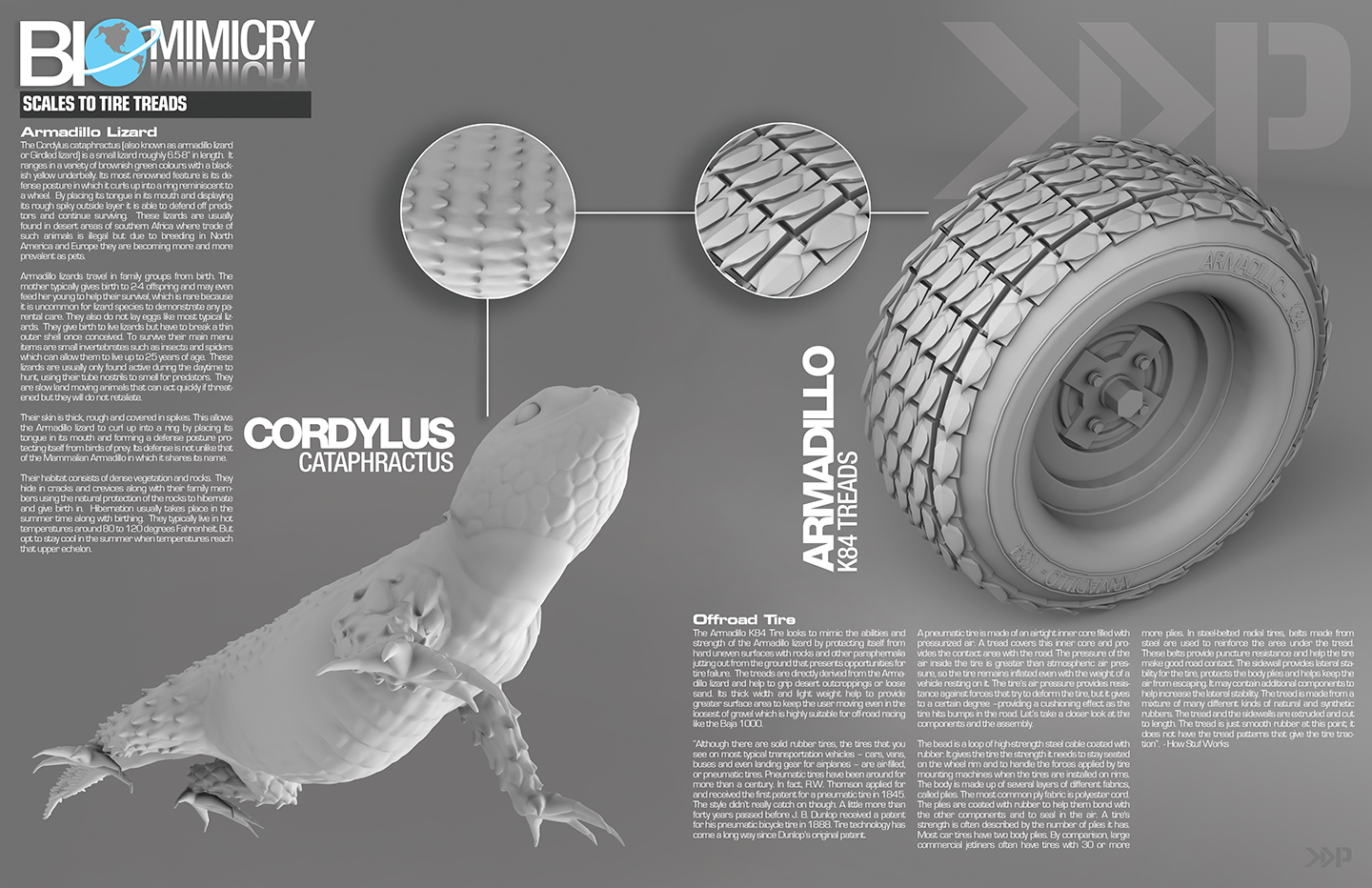
“Biomimicry does not have all the answers- species have gone extinct (this could be likened to a form of product testing on a large time scale), and others have filled niches by developing delicate relationships with their environment which means they are less adaptable than they “should” be. Other organisms have become predators, parasites or cannibals to survive. We should look to nature for inspiration- like a data base of tried and tested ideas. Nature does not have all the answers but it does have some very interesting ones that we could definitely learn from!”
(taken from:https://ghaui.wordpress.com/biomimicry/)